

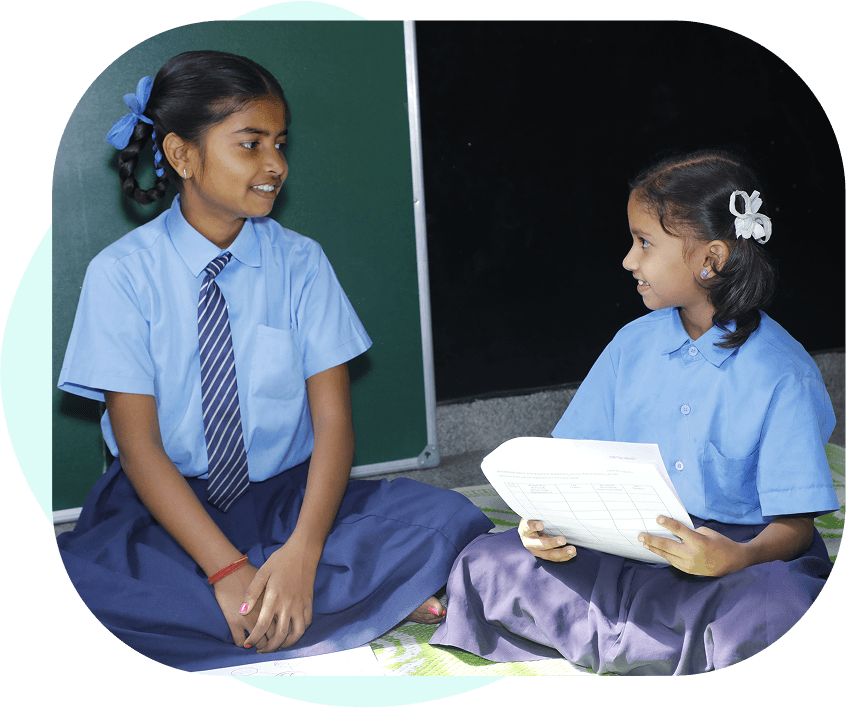
Education for children — whether in government or private schools — must be holistic. When learning focuses narrowly on academics, children miss opportunities to build life skills, creativity, and emotional well-being. While NEP 2020 recognises this need, systemic gaps in teacher capacity, curriculum design, and school infrastructure persist. Addressing these gaps can create engaging, child-friendly learning environments that nurture confident, skilled, and empowered learners.
Our goal is to ensure that every child in government schools experiences joyful, engaging, and holistic learning that supports academic growth, well-being, and lifelong learning in safe and inclusive environments.
We work with children, teachers, parents, and school systems to create inclusive, engaging learning environments that support whole-child development.
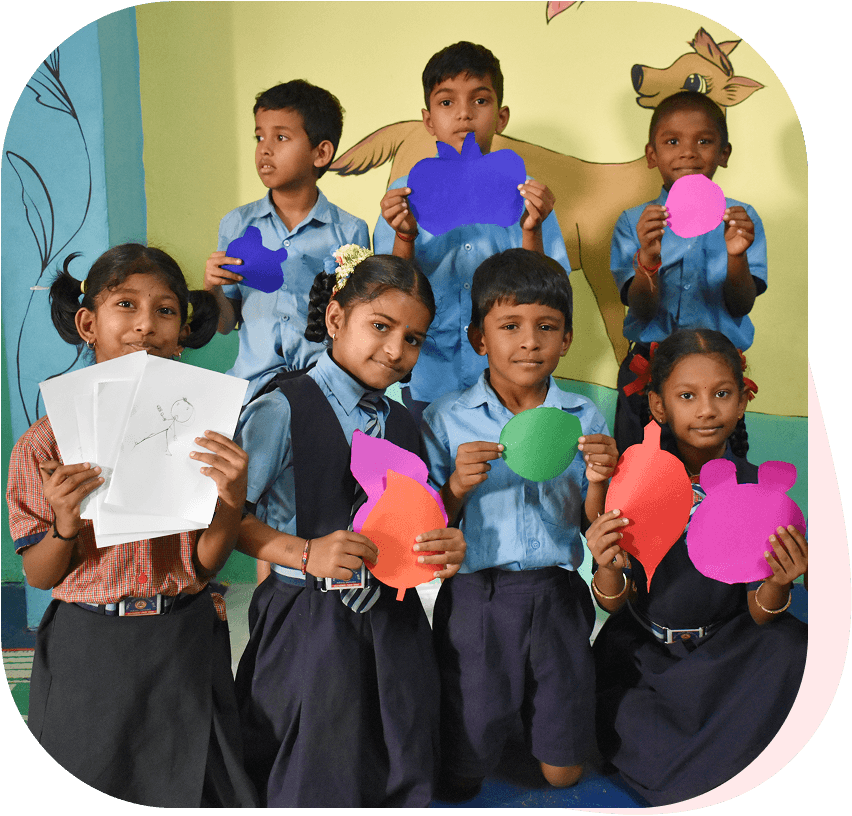
We create safe, welcoming, and engaging learning spaces within government schools, where children feel confident to participate, explore, and express themselves without fear.
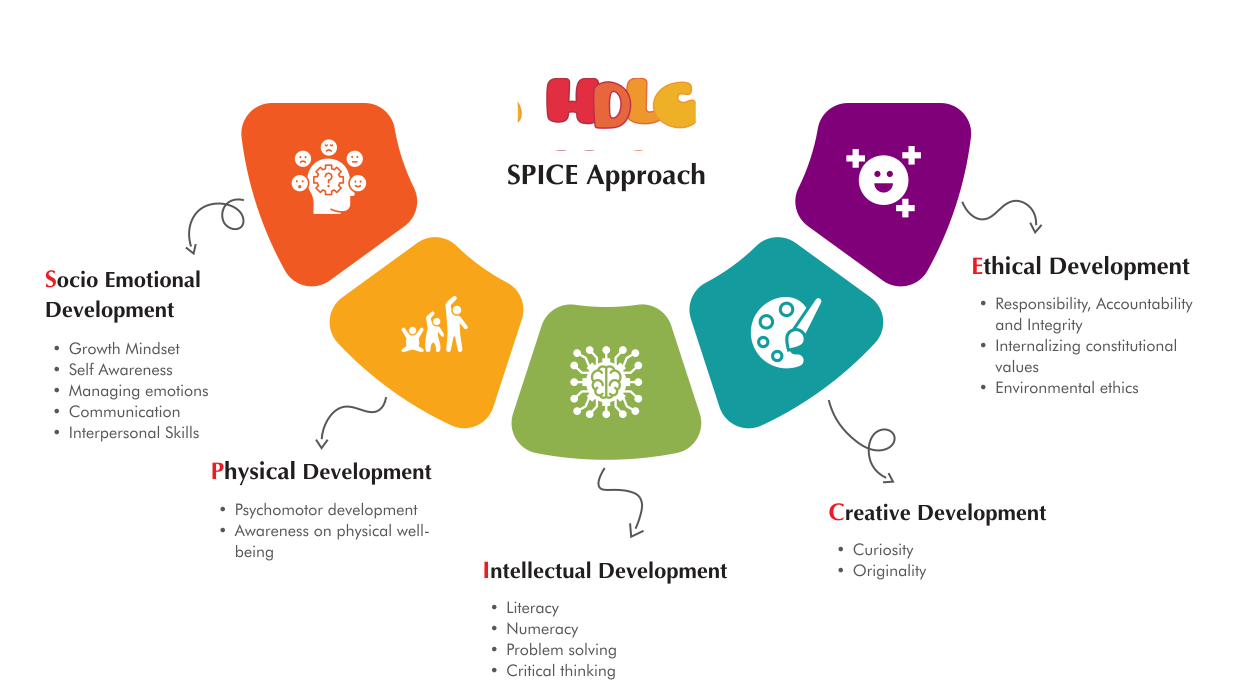
We enable children’s holistic development that nurture socio-emotional, physical, intellectual, creative and ethical development alongside strengthening Foundational Literacy and Numeracy (FLN) through joyful, activity-based sessions, events and exposure
Through Teacher Learning Circles (TLCs), workshops, and hands-on support, we help teachers adopt innovative, child-centric methods and integrate digital tools into their classroom practice.
We support schools in institutionalizing joyful learning practices through student-led assemblies, children’s parliaments, dynamic notice boards, and improved library systems — creating a culture of active learning and leadership.
We strengthen school–community relationships by encouraging active participation through PTMs, School Development & Monitoring Committees (SDMCs), and Samudaaya Datta Shaale (community-school meetings).


Schools Strengthened
Children Impacted
Teachers Trained
Discover heartfelt stories from those who have experienced the difference we make. Their words inspire and drive us to continue empowering communities.
Over the past few years, student admissions have steadily increased, reflecting the community’s trust in our education. Experiential learning has made classrooms more engaging, boosting students’ confidence, discipline, and ethical understanding. Our teachers’ creative methods have made learning joyful, and strong support from parents, the community, and SDMC members has fueled the school’s growth and success.
The sessions with Makkala Jagriti helped me grow in confidence and understand my emotions better. Through activities like the Summer Camp, I learned how to manage my feelings and express myself. These experiences have helped me feel more prepared for the future.
Dive into our blog to explore inspiring stories, impactful initiatives, and thought-provoking discussions on how education and empowerment are transforming lives in underserved communities.
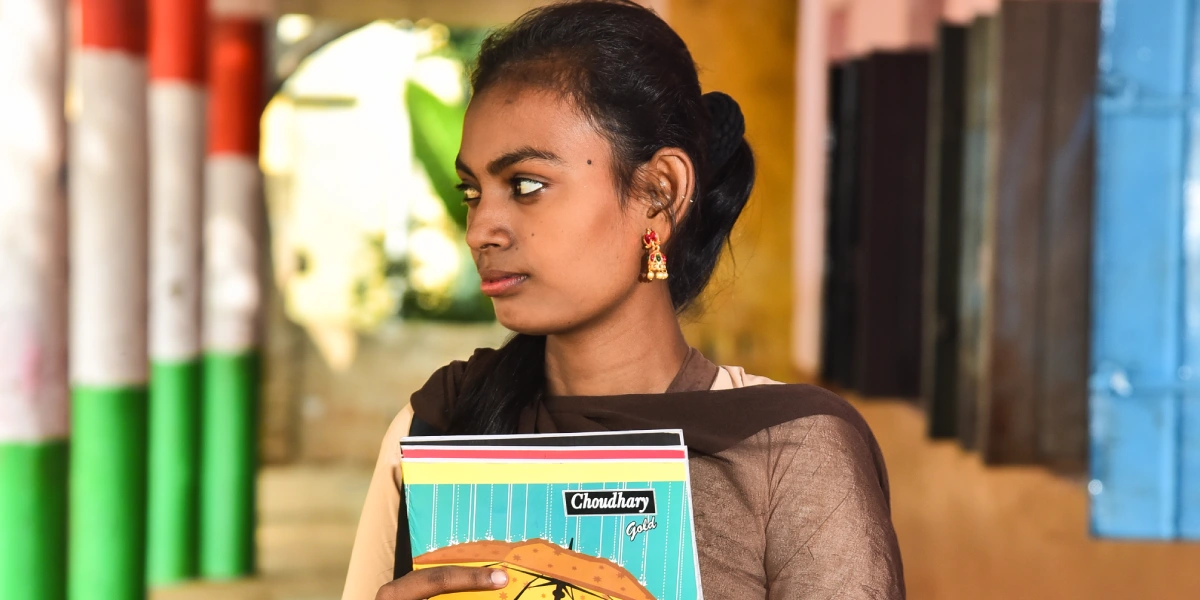
Growing up, Rubiya’s father’s physical disability and her parents’ limited access to education shaped daily
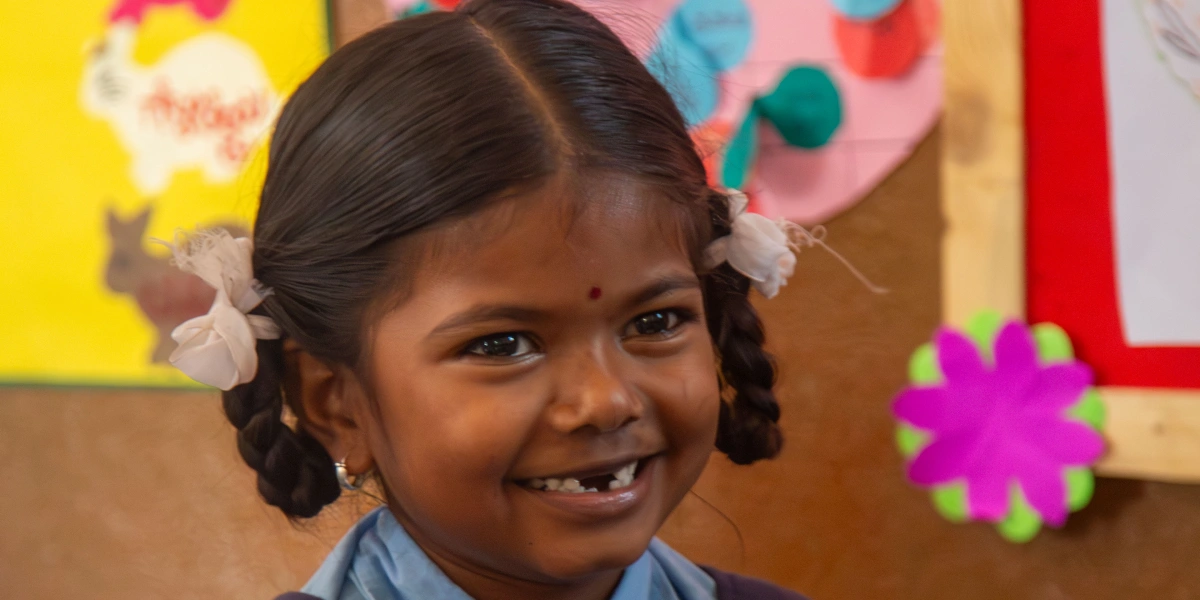
When Sakshi’s family moved villages, she stopped going to school. Her parents kept her at
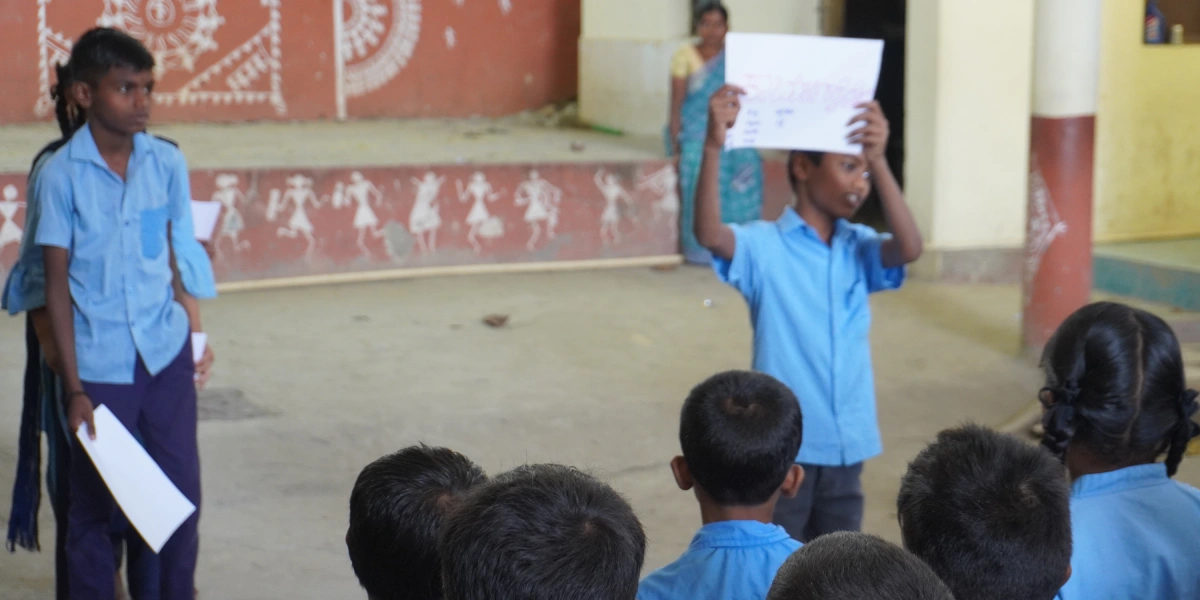
By the time Kalingappa reached Grade 8, he was known more for disruption than potential.
Subscribe to our newsletter for updates on our programs, success stories, and ways to get involved.