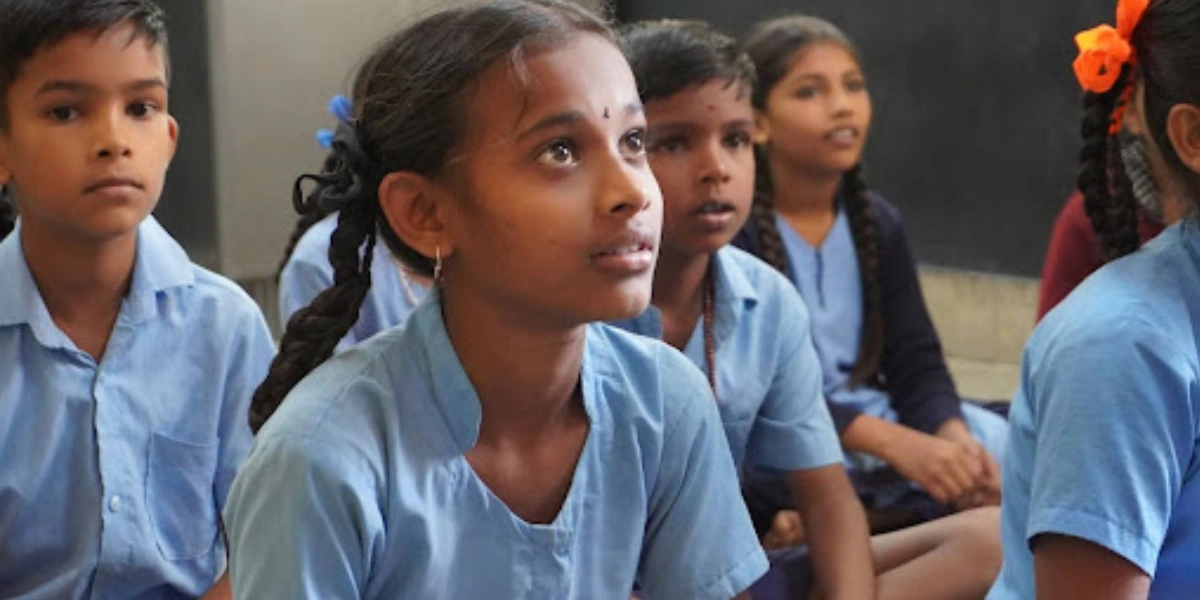
Many children today score well in exams, yet struggle with expressing themselves, working with others, managing emotions, or thinking creatively. This gap isn’t a reflection of their potential — it is a reminder that education focused only on academics cannot meet the needs of the whole child. In India, where education is a fundamental right, quality cannot be limited to textbooks, tests, and marks. True learning must support every dimension of a child’s growth — socio-emotional, physical, intellectual, creative, and ethical. When these areas are overlooked, children may succeed on paper but miss out on essential life skills that shape confidence, curiosity, and long-term well-being. Holistic development is not an optional layer in education; it is the foundation of what meaningful learning looks like.

A Balanced Approach to Growth
A holistic approach is not just ideal – it is necessary. When children do not receive a holistic education, their growth becomes uneven. They may perform well academically but struggle with expressing emotions, collaborating with peers, thinking creatively, or making responsible choices.
Research within India highlights this gap: studies show that while classrooms largely prioritise academics, comparatively little attention is given to socio-emotional development, especially in government schools (ResearchGate, 2022). As a result, children often lack essential skills in emotional self-management and communication skills that directly influence long-term educational engagement and well-being.
Global evidence reinforces this. A large meta-analysis of school programmes that integrated socio-emotional learning found that children performed, on average, 11 percentile points higher academically than their peers in traditional setups (Learning Routes, Meta-analysis of SEL Programmes). This shows that when children receive holistic support, their academic outcomes also strengthen.
A balanced focus on all aspects of development helps individuals:
- Build strong interpersonal relationships
- Maintain physical health and well-being
- Develop critical thinking skills
- Unleash creativity and innovation
- Cultivate a strong moral compass
Makkala Jagriti’s SPICE Model
Makkala Jagriti’s approach to holistic child development is encapsulated in its SPICE model, which emphasises the Socio-emotional, Physical, Intellectual, Creative, and Ethical dimensions of growth.
This model recognises that true development cannot be achieved through isolated sessions focusing separately on social-emotional learning (SEL), creativity, intellectual growth, or physical development. Instead, it requires an integrated curriculum where all SPICE components are interwoven seamlessly.

An Integrated Approach Through Theme-Based Learning
At Makkala Jagriti, themes serve as the anchor for holistic learning. Each theme—taken up for two months allows children to explore a concept from multiple angles, seamlessly connecting all SPICE dimensions. Rather than teaching skills or subjects in isolation, the theme becomes the central thread that ties together creative thinking, collaboration, problem-solving, expression, and real-world understanding.
For example, a theme like “Money” provides meaningful opportunities such as:
- Socio-emotional: Understanding needs vs. wants, recognising family financial situations with empathy, and discussing fairness or saving habits
- Physical: Games and activities involving movement-based trading, shop setups, or role-play
- Intellectual: Learning basic numeracy, simple budgeting, counting, value, and problem-solving
- Creative: Designing currency, creating shops, storytelling on responsible use of money
- Ethical: Conversations on honesty, sharing, mindful spending, and understanding the impact of money choices
Because the theme anchors all learning experiences, children naturally build connections, think more creatively, work collaboratively, and apply concepts meaningfully. This interconnected approach ensures that learning is holistic, engaging, and rooted in real-life contexts.
The Need for an Integrated SPICE Curriculum
Learning is inherently interconnected, and theme-based learning makes this connection visible and meaningful. When themes anchor the teaching process, children encounter concepts in multiple ways—through movement, dialogue, creativity, reasoning, and reflection. This helps them naturally link ideas, apply skills across contexts, and understand learning as a whole rather than as separate, unrelated parts.
Traditional, disaggregated curriculum structures—where socio-emotional learning, creativity, intellectual tasks, or physical activities are separated—often fail to capture this richness. For example, an art activity is not just a creative experience; it can build emotional awareness, strengthen cognitive skills, and encourage collaboration. Viewing it through a single lens limits our understanding of a child’s holistic development.
This is why Makkala Jagriti has designed an integrated SPICE curriculum that blends theory with hands-on, experiential learning. By ensuring that every theme connects to all SPICE dimensions, children receive a seamless and comprehensive learning experience that supports their holistic development.

Key Benefits of the Integrated SPICE Curriculum
1. Cognitive Growth
- Language and cognitive development naturally occur during integrated learning processes, enhancing overall educational outcomes.
2. Applying Skills in Real-World Contexts
- Isolated content limits skill application. Children need to learn diverse skills in an interconnected manner, which an integrated curriculum facilitates.
3. Aligning Curriculum with School Practices
- Integrating curriculum with school-wide practices ensures its adoption by teachers and promotes a consistent, holistic learning experience.
4. Achieving SPICE Outcomes
- Integrated, theme-based sessions and school-wide activities ensure that children apply SPICE skills in real-life contexts, leading to long-term benefits and a well-rounded foundation for future success.
Conclusion
Holistic education, through Makkala Jagriti’s SPICE model, is shaping the future of learning by embracing an integrated, multi-dimensional approach. By weaving together socio-emotional, physical, intellectual, creative, and ethical growth, we empower children with the skills and mindset needed to navigate life with confidence, creativity, and compassion.
References
- SEL Policy Initiatives and Classroom Practices in India. ResearchGate (2022).
- Meta-analysis of SEL Programmes. Learning Routes — summarising findings from global SEL research.
Written by – Viba K S, Deputy Manager – Communications