Passing Is Not the Same as Learning
The Karnataka government has announced that, starting in 2025–26, the minimum pass marks for Class 10 and 12 exams will be lowered. The intention is to reduce dropouts and make education more inclusive.
That’s a good step — but it also raises a deeper question: why do we still measure success only through marks?
Whether a child scores 33% or 35% matters far less than whether they are actually learning, thinking, and growing.

Seeing Learning Differently
During school visits, I often hear children described as “bright” or “slow” — based entirely on marks. But children’s potential doesn’t fit neatly into numbers.
One of our facilitators once shared a story that stayed with me: a student labelled “slow” came alive during a group activity. He took charge, helped his team participate, and led confidently. For the first time, his classmates looked up to him — and his face lit up with pride.
He showed leadership, empathy, and courage that day. None of that will ever appear on a report card.
Moments like these remind us that learning isn’t just about textbooks — it’s about discovering who you are and what you can do.
We Say Holistic Education — But Do We Mean It?
We often talk about Samagra Shikshana, holistic education. Yet most schools still operate around syllabus completion and exams.
Timetables are packed back-to-back with subjects, leaving little room for reflection, creativity, or expression. We want confident, curious children — but the system rarely creates time or space for it.
Attendance and marks are easy to record; joy, empathy, curiosity, and collaboration are not.
Why It Matters Today
Technology can find answers faster than any of us. Memorizing facts no longer defines success. What children — and adults — need today are the things machines cannot do: to imagine, to feel, to connect, and to make thoughtful choices.
The National Education Policy (NEP 2020) reminds us that learning should come from doing, not memorizing. Real change begins when we value the whole child, not just marks.
As one facilitator said: “When children are given space to express, even the quietest ones surprise us.”

How Makkala Jagriti is Shifting the Focus
If we know learning is more than marks, the real question is: how do we bring this belief into everyday classrooms?
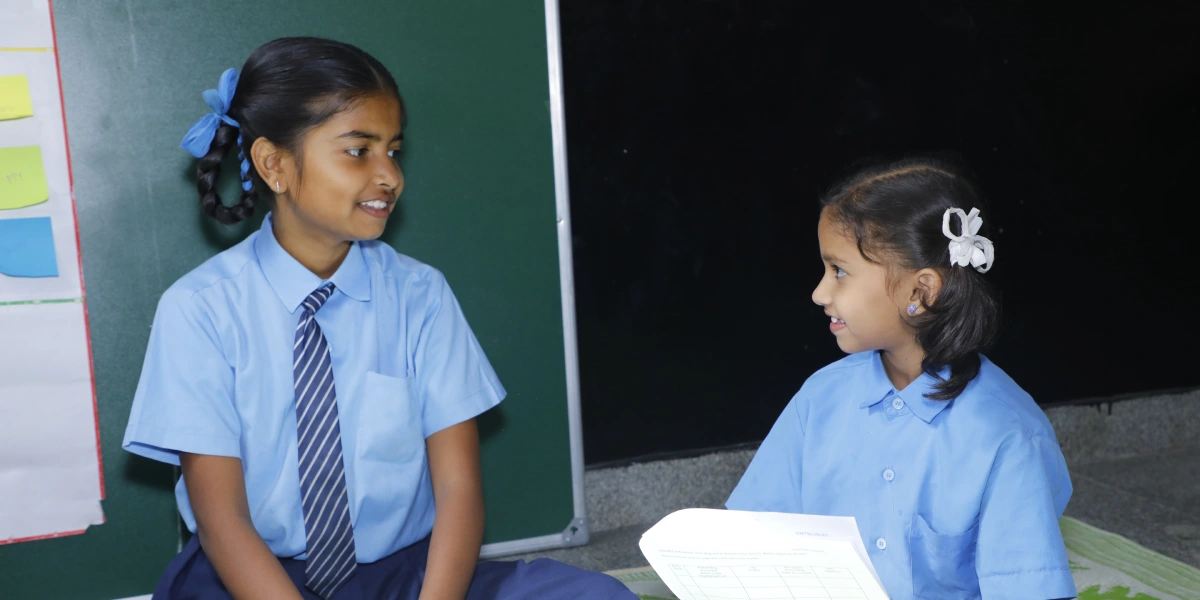
At Makkala Jagriti, our Holistic Development and Learning for Children (HDLC) program creates spaces where children learn through play, art, dialogue, and reflection.
Facilitators notice small but powerful shifts — a child speaking with confidence, helping a friend, or showing curiosity. These are the moments where real learning takes shape.
Some of these shifts are already visible in our partner schools, and they are possible anywhere. Across schools, change can begin in simple ways:
- Morning assemblies where children share stories or concerns
- Libraries that spark wonder, not silence
- Notice boards that celebrate children’s voices, not just rules
- Class parliaments where children listen and decide together
At HDLC, we strive for this every day — to make learning about life, not just about marks.
Beyond Marks

Lowering pass marks might move students through the system, but it will not prepare them for the future.
Children are stepping into a world full of complex challenges — climate change, stress, inequality, and everyday issues that require empathy, judgment, and resilience. These cannot be solved by memorizing answers in a textbook.
Marks may help clear an exam, but they don’t teach us to understand people, think deeply, or make meaningful decisions.
A Better Question
So the next time you meet a child, skip the “How much did you score?” Instead, ask them, “What made you curious today?”
That’s where real learning begins.
Written by – Vivek Shamaiah, Deputy Director of Programs – Holistic Development and Learning of Children, Makkala Jagriti