• VOLUNTEER
  • CAREERS
  • BLOG
DONATE
  • VOLUNTEER
  • CAREERS
  • BLOG
Makkala Jagriti Makkala Jagriti
  • ABOUT US
    • VISION, MISSION, CORE VALUES
    • OUR STORY
    • OUR TEAM
    • OUR PARTNERS
    • REPORTS
  • OUR WORK
    • ECCE PROGRAM
    • HDLC PROGRAM
    • YUVA JAGRITI
    • CAREGIVERS
  • JOIN THE MOVEMENT
    • DONATE
    • PARTNER
    • VOLUNTEER
    • WORK WITH US
  • CONTACT US
  • STORIES OF CHANGE
DONATE
Makkala Jagriti

The Importance of Childcare Homes: Nurturing Today’s Citizens for a Stronger Nation

Home / Blogs / The Importance of Childcare Homes: Nurturing Today’s Citizens for a Stronger Nation

The Importance of Childcare Homes: Nurturing Today’s Citizens for a Stronger Nation

This reflection is rooted in a recent conversation with Ms. Haleema, Director of ICPS. As we spoke about children living in childcare institutions, spaces that society often misunderstands, overlooks, or reduces to charity rather than recognizing as critical ecosystems of care, one thought stayed with me throughout our discussion:

“Previously, we used to say that today’s children are tomorrow’s citizens. But it’s not like that. Today’s children are today’s citizens.”

It made me reflect deeply on how the way we view and support childcare homes directly shapes the quality of care children receive within them. Public perception influences public will, policy attention, and resource allocation. When we see childcare institutions not as places of abandonment, but as spaces of protection, healing, and opportunity, we begin to treat them with the seriousness and dignity they deserve.


The way we care for children today shapes not only their individual futures but the future of our society and nation as a whole. When children grow up in environments that are safe, nurturing, and responsive to their emotional and developmental needs, care itself becomes an act of nation-building.

Ensuring children’s well-being cannot rest on families alone. It is a shared responsibility of the state, the central government, and the community at large. Because how we respond to vulnerable children today reflects who we are as a society right now. The values we practice, or ignore, within childcare homes shape the moral fabric of our nation in the present, not just the future.

Within this collective responsibility, childcare institutions play a crucial role. Yet, as a society, we often think of childcare homes as distant, unfortunate spaces, places we would rather not look at closely. We rarely pause to consider the lives unfolding within them, or the responsibilities we share toward the children who live there.

Often viewed merely as shelters, these institutions are in reality spaces of safety and healing for children who have faced some of life’s harshest realities, children rescued from child labour, survivors of abuse, children who have lost their parents, or those whose parents are in prison.

Many children enter childcare homes carrying fear, trauma, and unanswered questions. For them, a childcare home is not just a roof over their heads; it is often the first place where trust, dignity, and hope begin to take shape again.

What stood out strongly in the conversation was the emphasis on early and sustained care. While most childcare homes support children from infancy until the age of 18, the early years, especially up to the age of 12, are particularly critical. During this phase, children need consistent individual attention, guidance, and care.
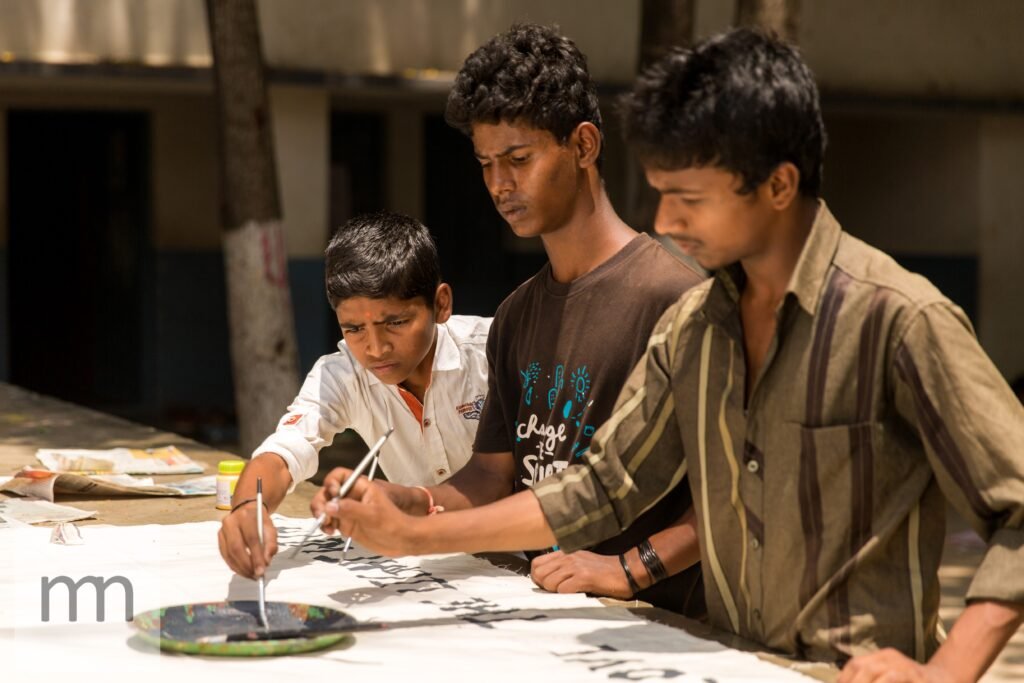

Children need adults who listen without judgment, who are willing to hear their stories, fears, and dreams. Every child deserves a safe space where emotions are acknowledged, where no pain goes unheard and no experience is dismissed.

Quality counselling and emotional care, therefore, are not optional; they are essential. When children are given the time and space to speak about what they have experienced, they can begin to process their emotions, heal, and rediscover a sense of self-worth. This was articulated powerfully by the Director during our discussion:

“In our children’s home, we need to give individual attention, and quality counselling is necessary to bring out what the child is really going through.”

A childcare home must go far beyond providing food and shelter. It must offer emotional security, stability, and relationships rooted in care and trust.

The conversation also returned repeatedly to a larger, shared hope—that childcare institutions should never be a permanent solution. The ultimate dream is a world where no child has to grow up in an institution. As the Director emphasised:

“I don’t want to see any child in a childcare institution in the future. As much as possible, we should ensure that every child is reunited with family—if not their immediate family, then extended family, and if not that, any family who can care for the child.”

Every child deserves a family, a home where they feel loved, valued, and protected. Wherever possible, children must be reunited with their biological families. When that is not feasible, extended families or adoptive families should be supported and encouraged to provide nurturing homes.

At the heart of this work lies a simple yet powerful belief: every child is special. In one childcare home, I witnessed this come alive during a small talent-sharing session. A quiet child who rarely participated in group activities volunteered to sing. What began as a hesitant performance slowly turned into a confident expression, met with applause from peers and caregivers. In that moment, the narrative shifted, from a child defined by circumstance to a child defined by ability and courage.

Experiences like these show how, when given safe and nurturing spaces, children begin to rediscover their strengths. Through thoughtfully designed programmes and joyful activities, they are encouraged to explore their interests, express themselves freely, and build a sense of confidence that extends far beyond the walls of the institution.

When children feel happy, heard, and valued, they begin to believe in themselves. And when a society truly invests in its children, it invests in its own future.

Do we see children in childcare institutions as someone else’s responsibility, or as part of our shared social fabric? Public perception influences policy, funding, volunteerism, and ultimately the quality of care children receive. When society cares, systems respond.
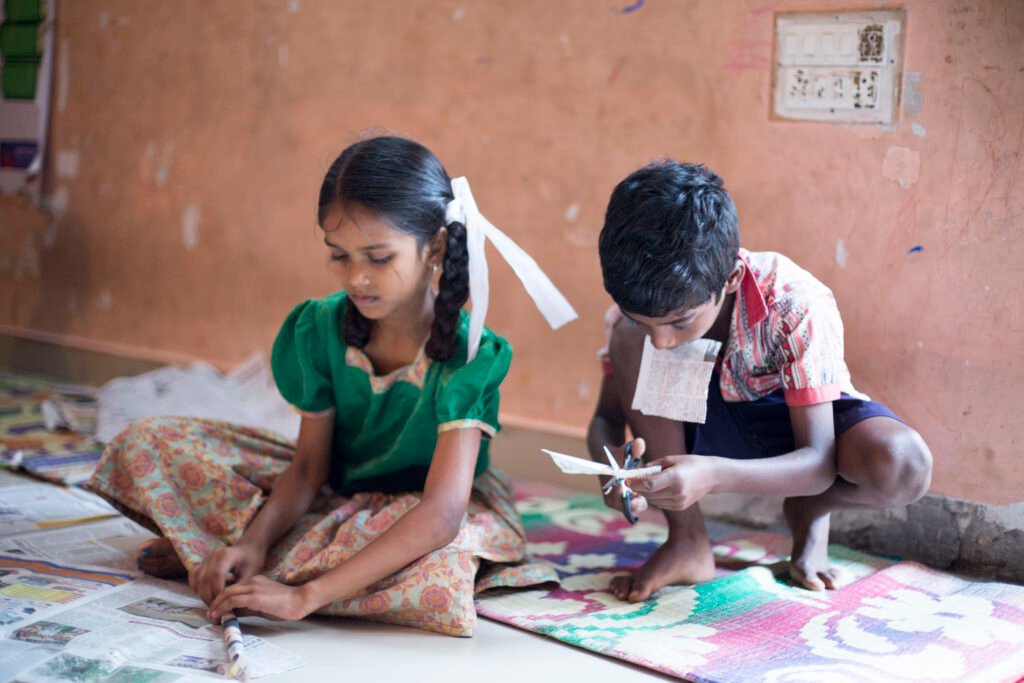

In our work at Makkala Jagriti, we have witnessed how collaborative efforts between institutions, counsellors, government departments, and civil society can gradually strengthen childcare ecosystems. Transforming a children’s home into a true home requires sustained partnerships and shared accountability.

Looking back at that conversation, one thought continues to stay with me:

“It is the collective effort of the government and the public to transform a children’s home into a home.”

Because a home is not defined by walls, but by dignity, emotional care, and opportunity. When childcare institutions are rooted in these values, they become transformative spaces, nurturing resilient individuals and, in doing so, building a stronger nation.

Written by Neeraja Anupama, Senior Coordinator, Communications 
 

64
Like this post
Makkala Jagrithi logo

Sign up for our newsletter by entering your email id

HOME

OUR WORK

JOIN THE MOVEMENT

PRIVACY POLICY

ABOUT US

CONTACT US

STORIES OF CHANGE

DONATE

BLOG

NEWS & EVENTS

CAREERS

© Copyright 2020 Makkala Jagriti

Developed by SriKa Marketing for Nonprofits

Copy
Cleantalk Pixel
best ngo in bangalore

Empowered Teachers Create Better Learners

To ensure children get quality pre-school learning opportunities in the Anganwadi, we empower the teachers and helpers through enhancing their knowledge, skills and attitude towards early learning and development.

“Through Anganwadi trainings, I have changed in a positive way and gained confidence about myself – especially in terms of catering to all domains of early learning. I have even started making learning materials by myself to teach children”.

– Nirmala, Anganwadi teacher, Rojipura

We train teachers and helpers on experiential learning methods that can be practiced at their centres. We also organise Mothers’ Meetings and regular mentoring visits to provide on-the-job support and guidance to teachers. Anganwadi helpers are empowered to become co-teachers and have an important role in the children’s learning process, thereby not confining them to just cooking and cleaning.

“I was used to just cooking and cleaning in the Anganwadi and did not do much else. However, after I attended the ECCE trainings, I realized I had a lot of potential and could engage and teach the children just like a teacher. Now, when the teacher is absent, I engage children in preschool learning activities.”

– Rukmini, Helper, Jyothinagar Anganwadi

From giving little time to learning, to prioritizing pre-school learning and spending more quality time with children, Anganwadi teachers and helpers have come a long way.

best ngo in bangalore

A Library with Toys!

In an effort to ensure that every household in the Anganwadi community had access to child-friendly learning materials, we started a novel initiative called ‘Toy Library’, which allowed parents to borrow toys and learning resources for their children.

“The Toy Library has been very useful for children. Whatever we teach at Anganwadi, they can continue learning at home independently. Parents also feel more equipped to engage their children at home. No wonder, within just two months of its launch, over 100 toys were borrowed from our Anganwadi.”

– Bhavya, Anganwadi teacher

The Toy Library concept was welcomed by the community and the time spent on learning at home increased!

“My child always preplans what he’d like to take home from the Toy Library. He has also become very responsible in maintaining the toys because he knows he must return them! In the past 3 months, we have borrowed 20 times already.”

– Shwetha, Parent, Vijayanagara Anganwadi, Doddaballapur

anganwadi school

Nammoora Anganwadi

We have seen great transformation take place when parents and community members are involved in shaping learning spaces for children and understand the importance of preschool education. The Anganwadi at Katamnallur, Bengaluru, transformed from a dull space to a vibrant and colourful learning centre, where children love to visit every day and parents and community members gather to participate in various activities.

“When we started our intervention, we saw that the environment at the Anganwadi was not safe or conducive for children. Although the community could contribute to the Anganwadi’s development, there was a major gap between the community, local leaders and Anganwadi teachers.”

– Gouri, Coordinator

Through community celebrations and fun events, we involved community members in the Anganwadi activities. As their participation grew, their understanding about the significance of early learning and development also increased and they readily contributed to the centre’s development.

“Community involvement in Anganwadi is so important. Inspired by Makkala Jagriti’s work, we saw the community, parents and Bala Vikas Samithi members come together and show greater ownership towards the Anganwadi.”

– Subramanya Swamy, Doddabanahalli Gram Panchayat Member

best ngo in bangalore

Equipping parents to become positive influencers

Manoj, a 12-year-old boy, hails from a family of garment workers who had migrated from Andhra Pradesh. On moving to Bengaluru in 2018, he joined the Government Primary School in Ulsoor. The drastic change in his environment and culture left him feeling withdrawn and fearful. He refused to speak or participate in any school activity. Over time, he confided in our HDLC facilitator about feeling neglected by his parents in such difficult circumstances.

Manoj’s mother was invited to participate in Makkala Jagriti’s parents’ workshop. The two-day residential workshop allowed her to reflect on her own mindset, biases and relationship with her son. At the end of it, she made a conscious decision to work on rebuilding and restoring her relationship with Manoj. At school, our facilitator noticed that this had a direct impact on his performance. He became more participative and improved in his academics. Manoj later shared with the facilitator that his relationship had become more harmonious and positive with his mother.

best ngo in bangalore

Breaking the language barrier for migrant children

Barnalli, a seventh grade student at Government Primary School, Somasundrapalya, is a child of migrant parents from Assam. Unable to speak the local language, Kannada, she found it difficult to adjust to school and struggled to mingle with other children.

“When you are new to a place and don’t know anyone, it is hard to fit in. She didn’t have any friends in school.”

– Barnalli’s mother

Makkala Jagriti’s language development program came to her rescue.

“Although I was in a higher grade, the HDLC facilitator taught me Kannada right from the basics. The different activities and sessions helped me grasp the language easily and quickly. Over time, Kannada moved from being just a new language to my favorite subject. Learning Kannada helped me enjoy school a lot more. I became a class leader and also started representing the school in inter-school competitions!”

– Barnalli

anganwadi school near me

How the education of one girl can impact generations ahead

Both of Mercy’s parents worked in the unorganised sector, who could not afford her school fees. She joined Makkala Jagriti Learning Centre at the age of 11, and always found the facilitators to be warm, welcoming and encouraging. Makkala Jagriti also supported her to pursue her education.

“We had a lot of freedom to explore our interests and talents. They taught us life skills and values. It was a new world for me.”

– Mercy

Through the Yuva Jagriti career guidance programme, Mercy received the right kind of insight and encouragement that led her to pursue a degree in Commerce, that too through a merit seat. Being the first girl in her family to study that far, she set an example in her community and made choices that allowed her to move beyond the circumstances that she was born into. Mercy now works in a reputed bank and is among our celebrated many who not only made a difference in their own lives but continue to do so in that of others.

anganwadi centres

Turning a Misguided Youth into a Community Leader

Prabhu was a teenager when the old, dilapidated building in which his family lived collapsed, leaving them without a home. While they were still grappling with the situation, Prabhu lost his father, the sole earning member of the family. Unable to process his difficult circumstances, he found strength in hanging around with his friends, who often indulged in gang wars and all forms of abusive behaviour.

Prabhu was a shy yet playful boy when he joined the Yuva Jagriti centre at the age of 15. He expressed, “I feel I am at crossroads, not sure which road to take”. Following our support and guidance, he decided to pursue an internship at Makkala Jagriti. He was entrusted to work with children from Shelter Homes. Today, Prabhu is a sought-after Creative Facilitator and Coordinator at Makkala Jagriti, managing three Community Centres. A silent yet sound performer, he brings in diverse and highly creative ways to engage children and help them learn and grow.

best ngo in bangalore

From a 10th Std. dropout to a World Taekwondo Champion

Murali lived in Bengaluru with his brother, while his parents lived in a village in Tamil Nadu. After his 10th grade, he lost the interest and inclination to study further. When he joined Yuva Jagriti, he started learning Taekwondo at our centre, which helped him become calmer and more focused. He also showed immense capacity to work with children, especially in the areas of sports and creativity, and this landed him an opportunity to work with Makkala Jagriti. Alongside his work, he pursued Taekwondo and competed at the District, State and National levels. He won a number of Gold Medals.

Today, Murali is an accomplished Taekwondo instructor, teaching at many schools in Bengaluru. He brought great accolades to the Nation when he won two bronze medals at the World Taekwondo Championship in Korea in September 2017.